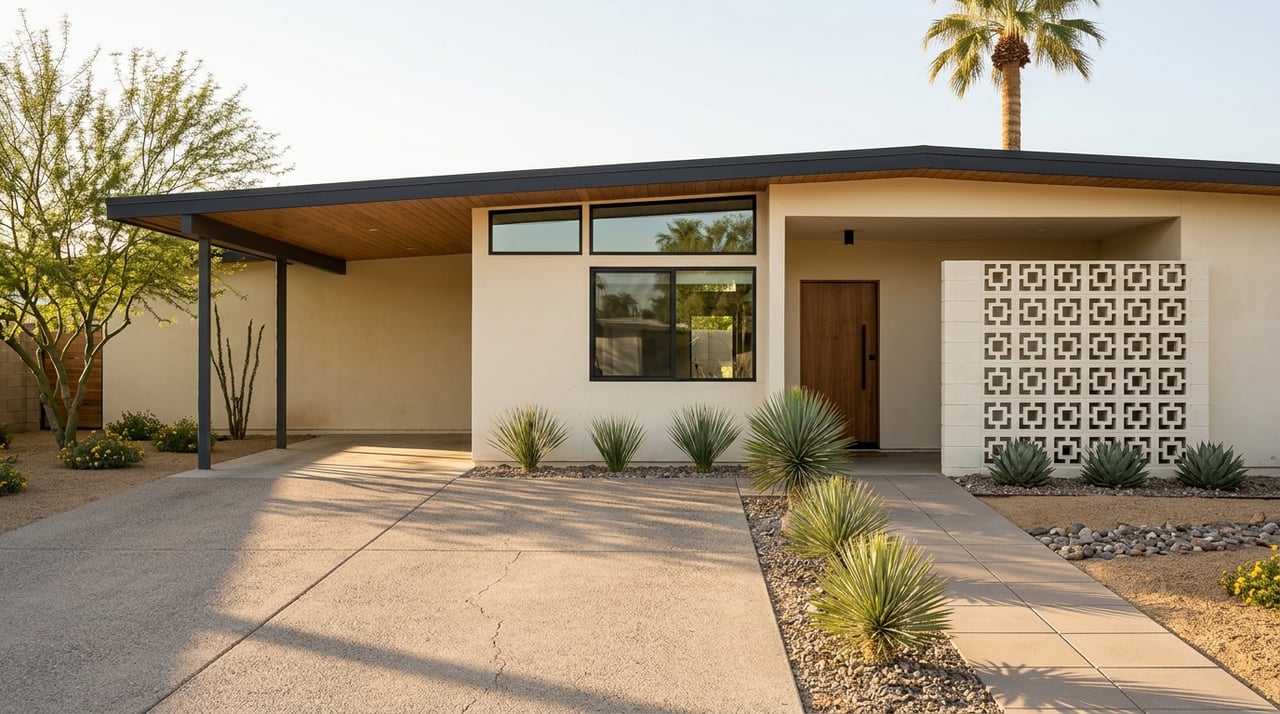
What makes Palm Springs feel so instantly recognizable? For many buyers and design lovers, it is the city’s unmistakable mid-century modern homes, with clean lines, glass walls, and indoor-outdoor spaces that still feel fresh today. If you are curious about what defines these properties, where to begin your search, and what to watch for before you buy, this guide will help you make sense of Palm Springs’ most iconic architectural style. Let’s dive in.
Why Palm Springs and mid-century modern fit so well
Palm Springs’ official historic context identifies the city as having a particularly strong collection of post-World War II Modern architecture. The city’s general plan also notes that Palm Springs is best known for mid-century modern architecture, with forms and materials that suit the desert setting.
That local connection is a big reason these homes continue to stand out. In Palm Springs, mid-century modern was not just a design trend. It was a practical response to climate, new building technology, and the desire for homes that could be built efficiently while embracing desert living.
What defines a Palm Springs mid-century home
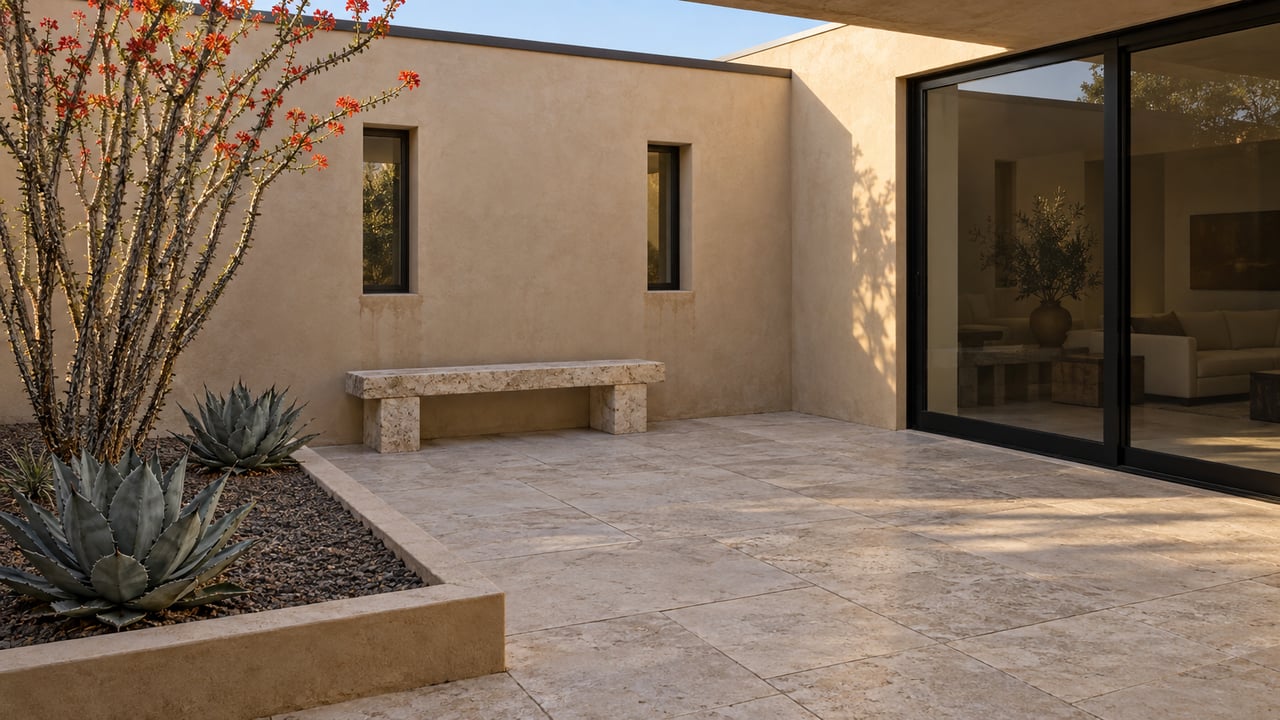
In Palm Springs, mid-century modern homes often feature post-and-beam construction, large expanses of glass, open floor plans, and concrete block or perforated concrete screens. These elements helped manage strong sun, support airflow, and connect the home to patios, mountain views, and outdoor living areas.
You will also often see simple geometric shapes and very little exterior ornament. The overall look is clean, direct, and functional, which is part of why the style still feels current.
Key features to look for
When you tour homes in Palm Springs, keep an eye out for these common details:
- Expressed post-and-beam construction in wood or steel
- Flat roofs or low-pitched gable roofs
- Wide overhanging eaves and canopies
- Large glass walls and sliding doors
- Clerestory windows that bring in light while protecting privacy
- Open layouts that connect interior spaces to patios
- Unadorned wall surfaces and simple geometric massing
- Concrete block, perforated concrete, wood, or metal screens for shade and airflow
Some of the more sculptural homes take things even further. In those examples, you may see butterfly roofs, A-frames, folded-plate roofs, or barrel vaults that add a more expressive, dramatic look.
Why the style still feels modern now
Part of the lasting appeal comes from how well these homes respond to the desert environment. Palm Springs planning guidance emphasizes desert-responsive architecture, native desert plants, shade, and low-water landscaping. That planning approach aligns closely with the same indoor-outdoor logic that made mid-century modern homes work so well in the first place.
For you as a buyer, that means these homes often offer more than visual appeal. They can also reflect smart ideas about light, shade, airflow, and the relationship between the structure and the site.
Architects who shaped Palm Springs
Palm Springs’ modern story is tied to a remarkable group of architects and designers. The city’s survey connects local modernism to a broader architectural lineage that includes Richard Neutra, Rudolph Schindler, Gregory Ain, Craig Ellwood, and Harwell Hamilton Harris, while also naming major local practitioners who helped define the city’s look.
Several names come up again and again when you explore Palm Springs architecture:
Albert Frey
Albert Frey lived and worked in Palm Springs beginning in 1934, according to the Palm Springs Art Museum. Frey House II remains one of the best-known examples of his work and reflects the site-sensitive, desert-focused thinking that shaped much of the city’s modern identity.
E. Stewart Williams
E. Stewart Williams is closely associated with some of Palm Springs’ best-known buildings. The city survey links Williams to Frank Sinatra’s Twin Palms, and the Palm Springs Art Museum’s Architecture and Design Center is housed in an E. Stewart Williams building.
William Cody
William Cody’s influence extends across both residential and nonresidential properties. The city survey associates Cody with places such as St. Theresa Catholic Church and the Caliente Tropics Hotel, which shows how modern design spread throughout Palm Springs beyond private homes.
Donald Wexler and William Krisel
Donald Wexler and William Krisel are tied in the city survey to projects such as Ocotillo Lodge. The survey also links them, along with Harrison, to Royal Hawaiian Estates, where Palm Springs modernism took on refined Tiki-inspired design elements.
John Lautner
John Lautner’s Arthur Elrod House stands out as one of Palm Springs’ clearest organic or expressionist landmarks. The city survey describes it as a concrete, site-specific design that blends into the rocky hillside in a highly sculptural way.
Richard Neutra
Palm Springs’ historic inventory lists the Grace Lewis Miller Residence as a Richard Neutra-designed property. For many architecture-minded buyers, Neutra’s presence adds another important layer to the city’s design legacy.
Where to begin your home search
If you want to explore this style as a buyer, it helps to start with neighborhoods and districts that are recognized by the city or identified in the historic inventory as having mid-century resources. That does not mean every home in those areas is historic, but it does give you a practical framework for narrowing your search.
Good starting points include:
- Twin Palms
- Royal Hawaiian Estates
- Racquet Club Cottages West
- Sandcliff Garden Homes
- Park Imperial South
- Country Club Estates
- Sunmor
- Deepwell
- Vista Las Palmas
- Racquet Club Estates
- The Movie Colony
- Indian Canyons
- Tahquitz River Estates
Each area has its own mix of home types, lot patterns, and architectural character. If design is a priority for you, an architecture-first home search can save time and help you focus on properties that better match your goals.
What buyers should confirm before making an offer
Palm Springs buyers should look beyond style alone. The city advises property owners and buyers to confirm whether a home is a designated Class 1 or Class 2 historic site or whether it sits within a historic district.
That matters because the city lists demolition and major or minor alterations as reviewable actions for historic properties. The city also provides technical guidance on buying, selling, and altering historic homes, which can affect how you plan updates, repairs, or long-term stewardship.
Historic status and renovation planning
If you love the look of a mid-century home but plan to remodel, historic status should be part of your early due diligence. A home’s designation may influence what changes are reviewed by the city, especially for exterior work or significant alterations.
That does not mean historic properties are off-limits. It simply means you should understand the rules, your options, and the long-term responsibilities before you move forward.
Mills Act potential
The City of Palm Springs notes that the Mills Act can provide potential property-tax relief in exchange for preservation commitments. For some buyers, that can be a meaningful factor when evaluating the ongoing cost of ownership.
As with any historic property question, the key is to verify how a specific home is classified and what commitments may apply. Clear information up front can help you avoid surprises later.
Mid-century modern beyond private homes
One thing that makes Palm Springs especially interesting is that mid-century modern was not limited to single-family houses. The city survey notes that the style became the predominant architectural approach in the postwar years and appears in nearly every property type, from homes to commercial buildings and even gas stations.
That wider presence gives Palm Springs a strong visual identity. As you drive through the city, you can see how the same design language carries across neighborhoods, civic spaces, hospitality properties, and everyday streetscapes.
How to explore the style before you buy
You do not need to be actively house hunting to start learning the landscape. Palm Springs Art Museum treats architecture and design as a core part of its permanent collection, and its archives include material tied to figures such as Albert Frey, Hugh Kaptur, Donald Wexler, E. Stewart Williams, and Richard Neutra.
Modernism Week is another major touchpoint for visitors and future buyers. Its mission is to celebrate and foster appreciation of midcentury architecture and design while encouraging education, preservation, and sustainable modern living. According to Modernism Week, Palm Springs hosts an 11-day festival in February and a four-day event in October, giving visitors access to private residences, historic buildings, architects, and scholars.
Why guidance matters in a niche market
Buying a mid-century modern home in Palm Springs is often about more than square footage or bedroom count. You may be weighing architecture, historic status, renovation goals, lifestyle fit, and long-term value all at once.
That is where direct, experienced guidance can make a real difference. A thoughtful search can help you compare not just homes, but also location, design integrity, property condition, and what ownership may realistically involve.
Whether you are searching for a classic post-and-beam home, a design-forward condo, or a property with preservation potential, having one-on-one support can help you move forward with more clarity. If you are ready to explore Palm Springs architecture with a broker who understands the local market and the lifestyle behind it, connect with Charles Estates Luxury Properties.
FAQs
What makes Palm Springs mid-century modern homes unique?
- Palm Springs mid-century modern homes are known for post-and-beam construction, large glass walls, open floor plans, flat or low-pitched roofs, deep overhangs, and shade elements like concrete or perforated screens designed for desert conditions.
Which Palm Springs neighborhoods have notable mid-century modern homes?
- Practical starting points include Twin Palms, Royal Hawaiian Estates, Racquet Club Cottages West, Sandcliff Garden Homes, Park Imperial South, Country Club Estates, Sunmor, Deepwell, Vista Las Palmas, Racquet Club Estates, The Movie Colony, Indian Canyons, and Tahquitz River Estates.
What should Palm Springs buyers check before buying a historic home?
- You should confirm whether the property is a designated Class 1 or Class 2 historic site or located within a historic district, because demolition and major or minor alterations may be subject to city review.
Can a Palm Springs historic home offer tax benefits?
- The City of Palm Springs notes that the Mills Act can provide potential property-tax relief in exchange for preservation commitments.
How can you learn more about Palm Springs architecture before buying?
- You can explore architecture-related collections at the Palm Springs Art Museum and attend Modernism Week events, which feature access to private residences, historic buildings, architects, and scholars.